Case study · JOYN
Accessible streaming. From legal deadline to lasting practice.
Image: ChatGPT
Executive brief
The challenge
JOYN had 9 months to prepare for the EAA – European Accessibility Act across five product platforms, with no central accessibility ownership or established operating model.
My role
As VP UX Design & Research, program lead and product leadership sponsor, I established the baseline, aligned cross-functional leadership, secured a dedicated task force and translated accessibility findings into a prioritized product and operating roadmap.
The shift
Accessibility moved from a legal compliance problem owned by nobody to a shared product capability embedded across UX, engineering, product and editorial.
01 · Overview & Starting point
A legal deadline—and nobody accountable for meeting it
 (opens enlarged image)
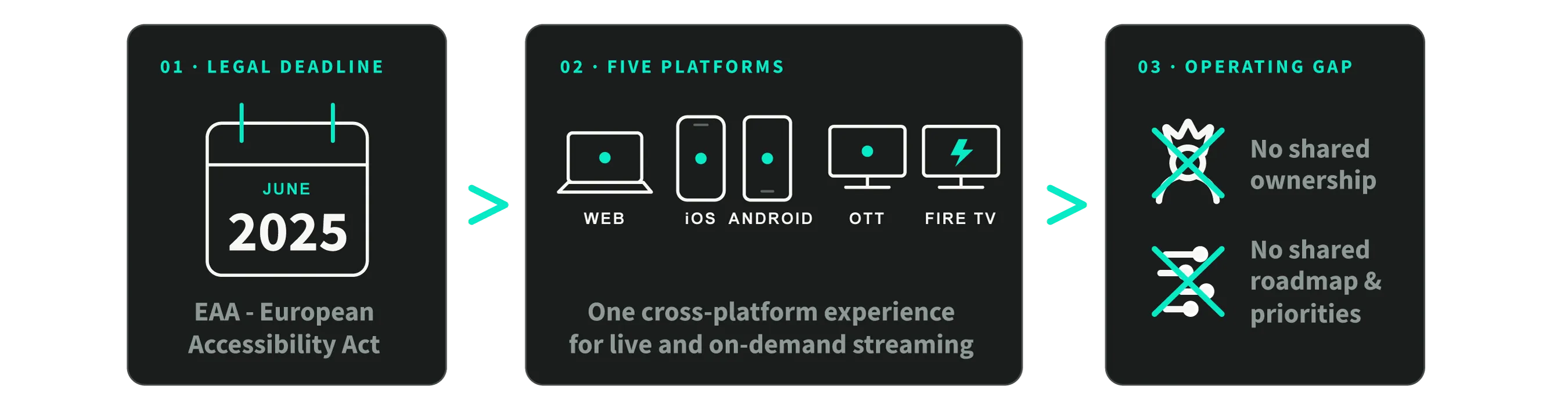
In 2024, JOYN faced a fixed deadline: meet the requirements of the European Accessibility Act by June 2025. Yet no team owned accessibility across its web, mobile and TV products. Leadership understood the urgency but feared that compliance could derail existing roadmaps or require platforms to be rebuilt.
I stepped in to establish a baseline, make the challenge actionable and create the organisational ownership needed to move forward. Accessibility wasn’t only a compliance requirement. If JOYN wanted to position itself as the DACH “superstreamer,” the experience needed to work for a broader range of audiences.
02 · Understand · A11y compliance
First we had to make JOYN’s accessibility tangible
 (opens enlarged image)
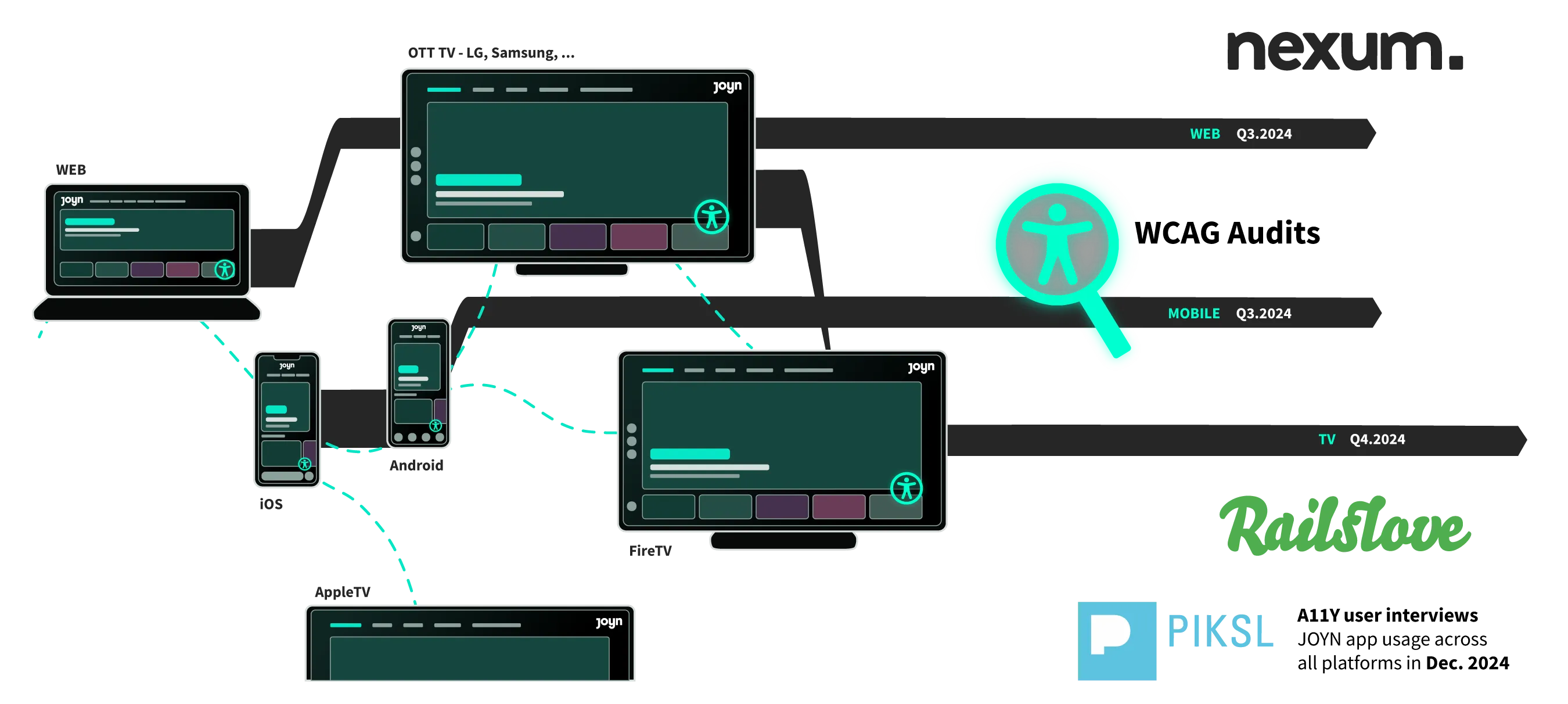
Together with my head of UX research and three specialised partners (Nexum, Railslove and PIKSL), we established JOYN’s first accessibility baseline. Technical audits assessed representative journeys across web, iOS, Android, Fire TV and other TV platforms.
In parallel, interviews with people with disabilities and watching a great variety of YouTube clips of impaired users talking about their ways of using digital services helped us gain first understanding about how those barriers affected real streaming experiences.
Combining technical evidence with lived experience prevented accessibility from becoming a purely legal checklist.
03 · Understand · Audit tactics
Then we needed to decide which moments to analyse
 (opens enlarged image)
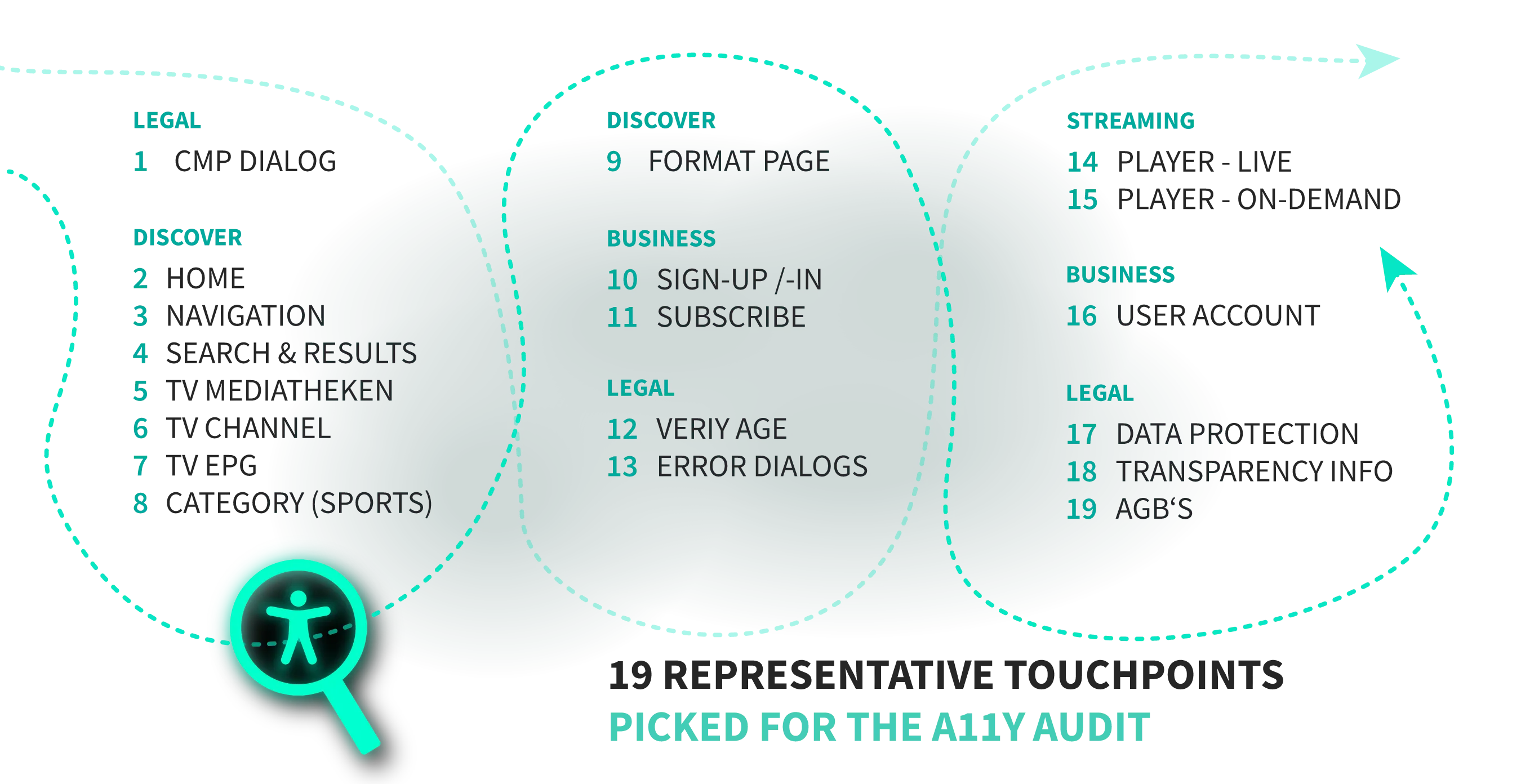
Picking a representative journey allowed us to audit the moments that mattered most to users, the business and legal compliance. The journey illustrates a typical walkthrough of a user coming to JOYN. From discovering something to stream by browsing or searching, hitting the reg-wall, youth-verification and finally entering streaming of live- or on-demand content.
Rather than auditing every screen, I proposed a set of unique templates and aligned them with internal stakeholders and our audit partners, Nexum and Railslove. The resulting 19 touchpoints focused the audit on critical user, business and compliance moments while revealing systemic issues across platforms.
04 · Understand · User needs
Then we learned accessibility is not one user need
 (opens enlarged image)
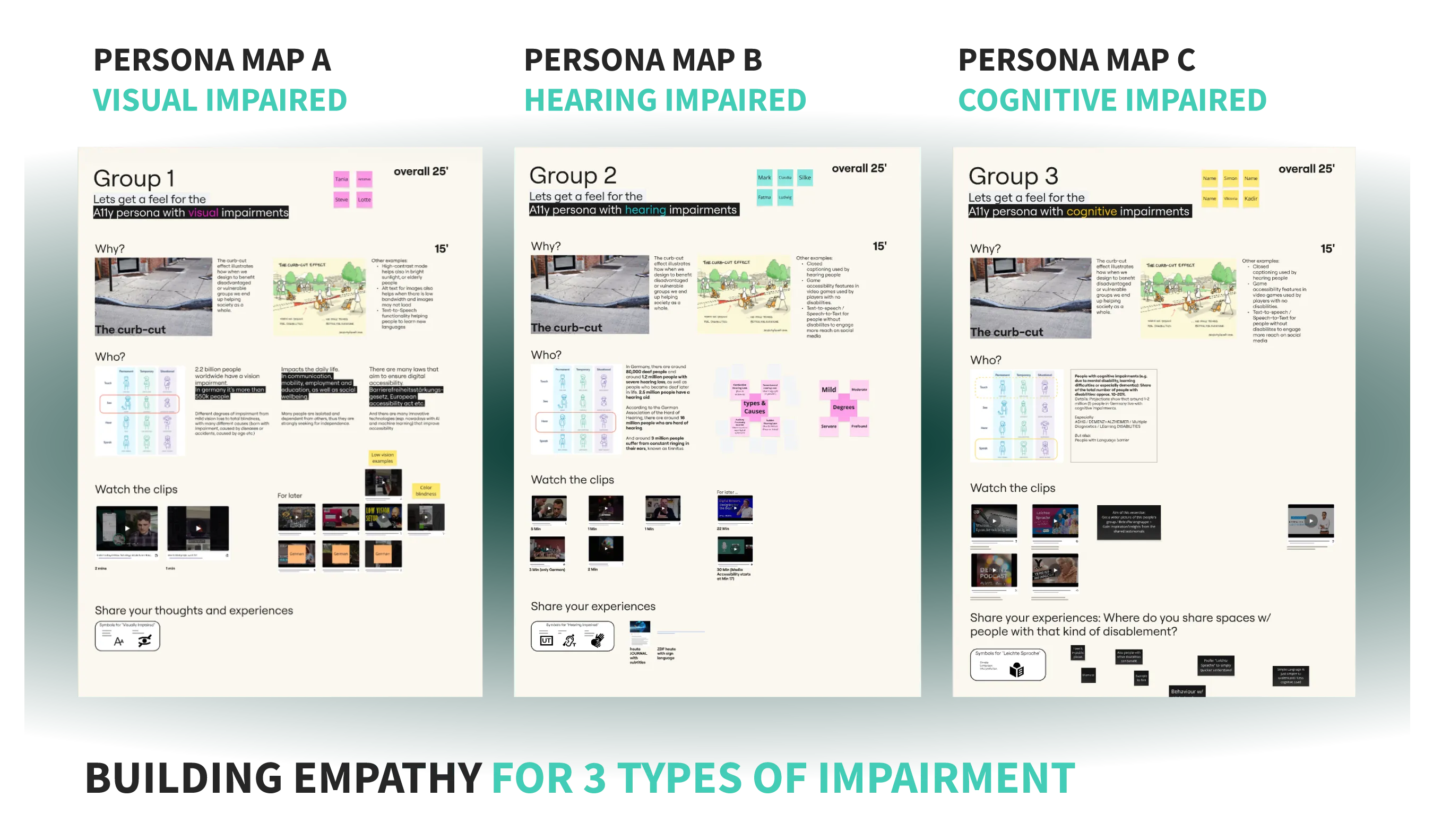
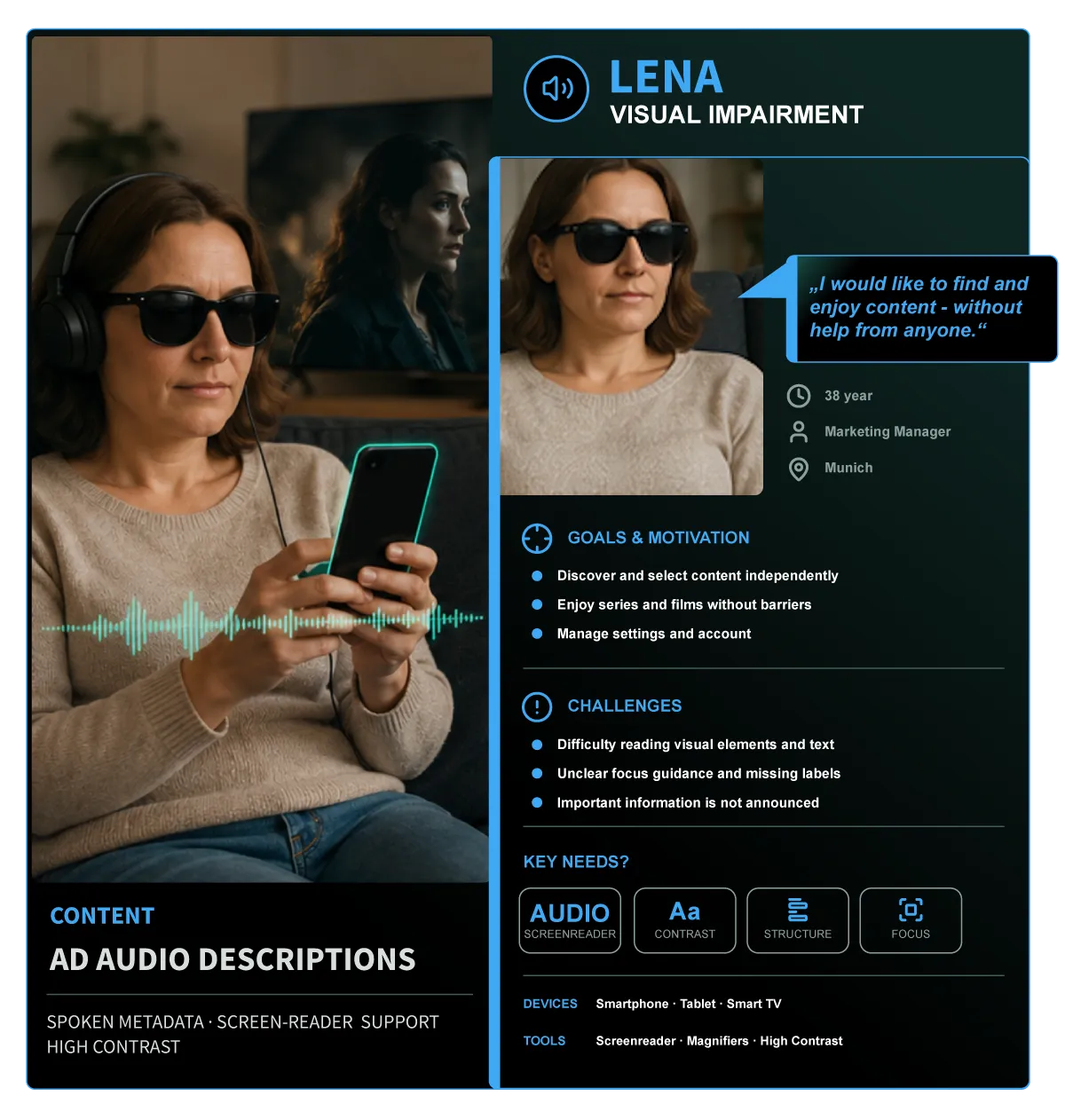
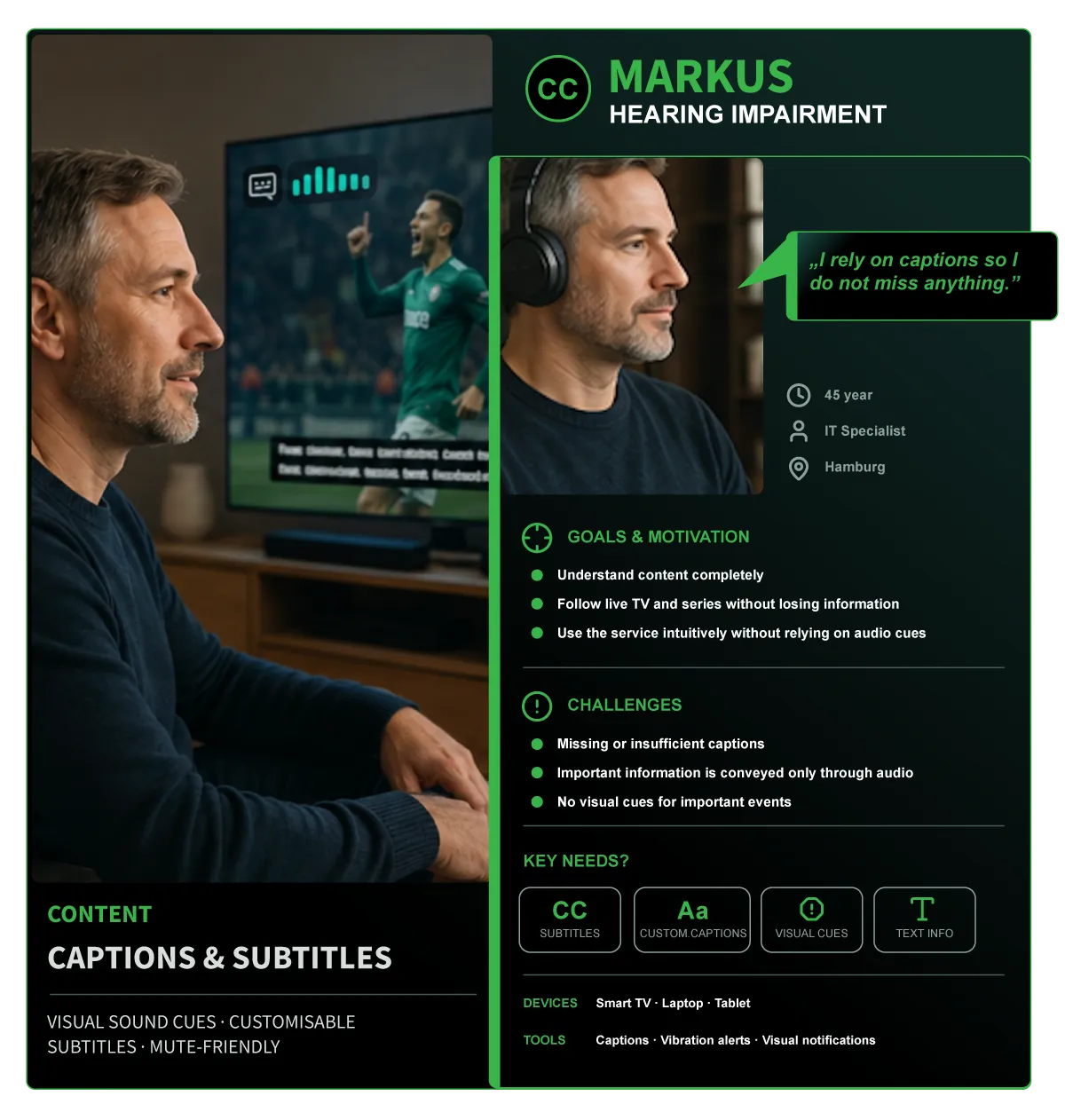
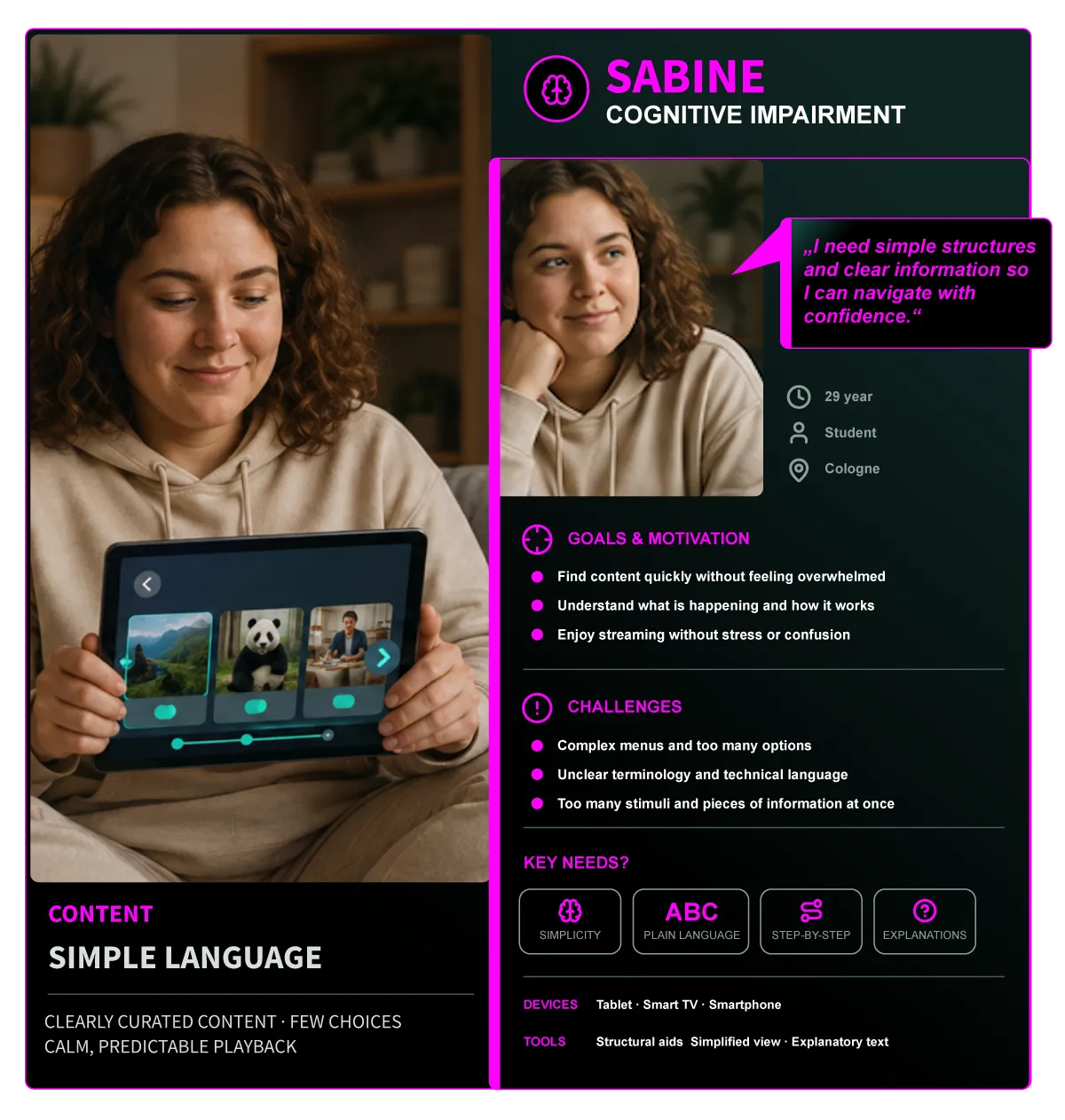
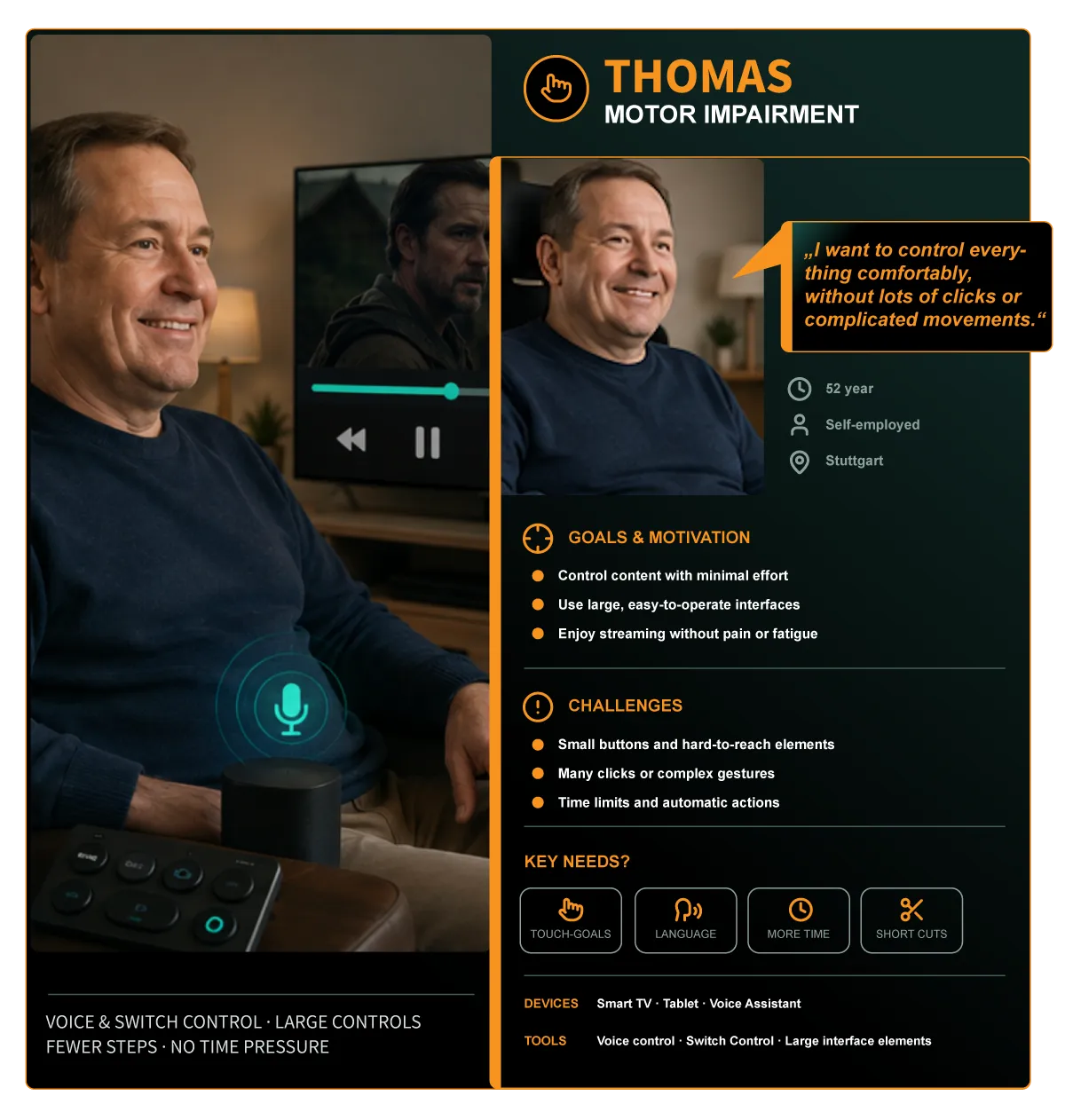
User interviews and WCAG analysis revealed four groups of barriers: visual, auditory, cognitive and motor. To make these needs tangible and support regular feedback in our agile work, we translated them into video-supported persona maps focused on behaviours, assistive technologies and content needs—not demographics.
This gave product, engineering and editorial teams a shared language for discussing accessibility beyond compliance.
A note on AI driven new-ways-of-working in design thinking
Today’s generative AI tools could have made our persona maps more vivid and distinctive. The profiles below reinterpret publicly available accessibility research to help others better understand the needs of streaming fans with disabilities.
05 · Understand · A11y tech
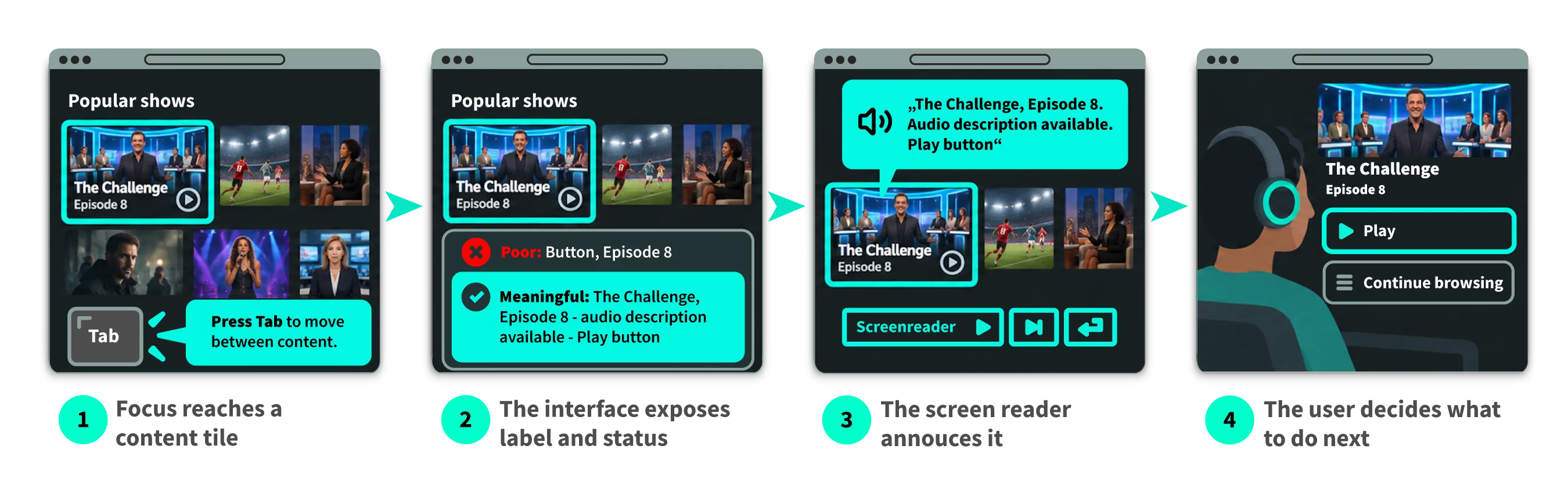
Assistive technology revealed an invisible layer of UX
 (opens enlarged image)
Watching people use screen readers and voice control revealed an often-invisible layer of UX. Beyond visual hierarchy, meaningful labels, useful descriptions and logical focus order were essential to navigation and orientation.
Supporting assistive technologies became our highest priority, shaping team roadmaps, definitions of done and how designers and engineers designed, reviewed and shipped UI components.
06 · Define · The challenge
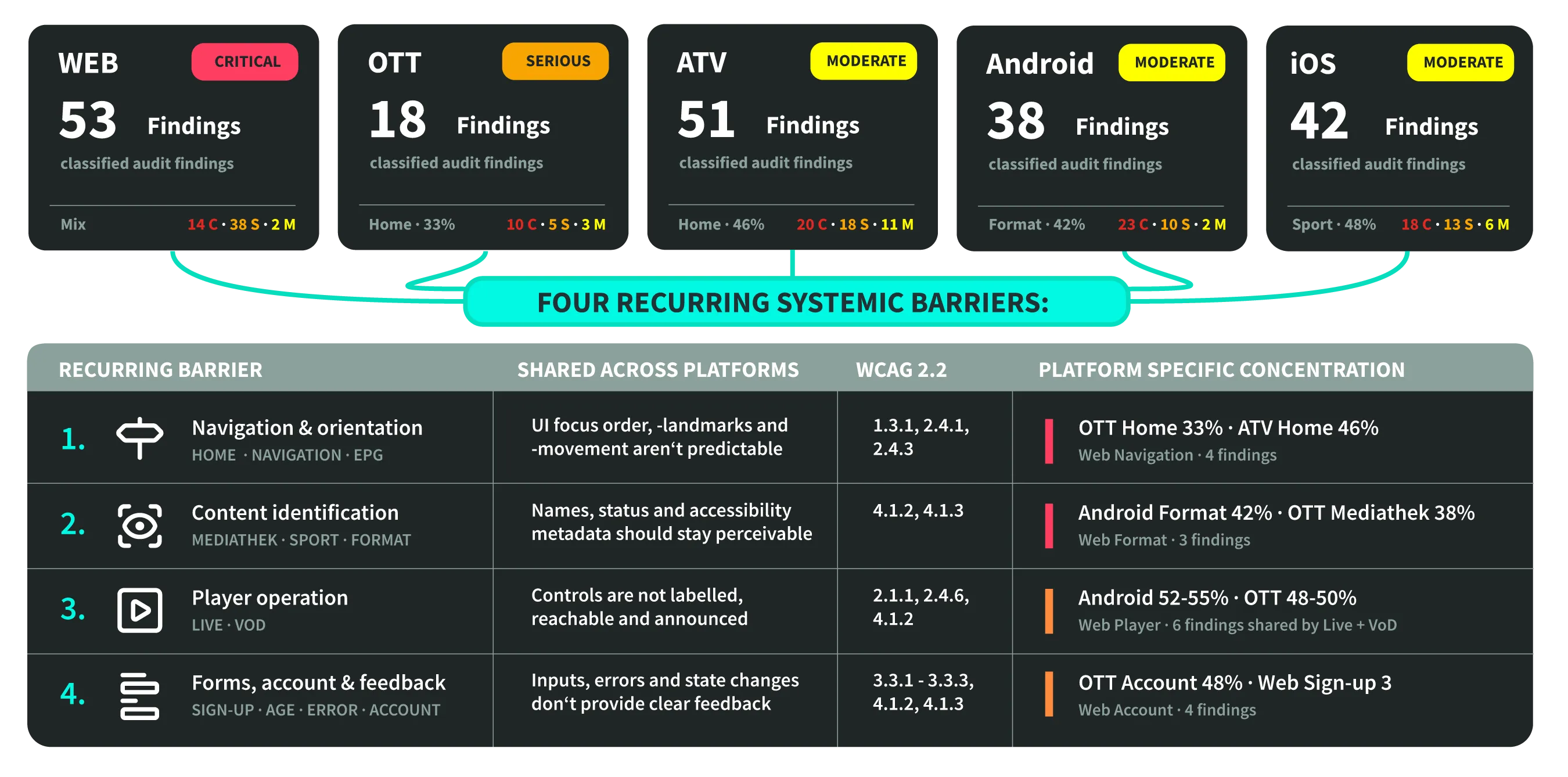
The audits revealed 4 systemic challenges
 (opens enlarged image)
The audits identified an overwhelming amount of issues, but a list of defects was not yet a strategy. Some barriers were specific to individual platforms, while others—such as missing labels, inconsistent focus behaviour and insufficient content metadata—reappeared across the ecosystem.
We needed to distinguish urgent platform fixes from shared structural, systemic issues that required coordinated investment aka becoming candidates for shared and coordinated roadmap priorities.
07 · Define · A11y ops
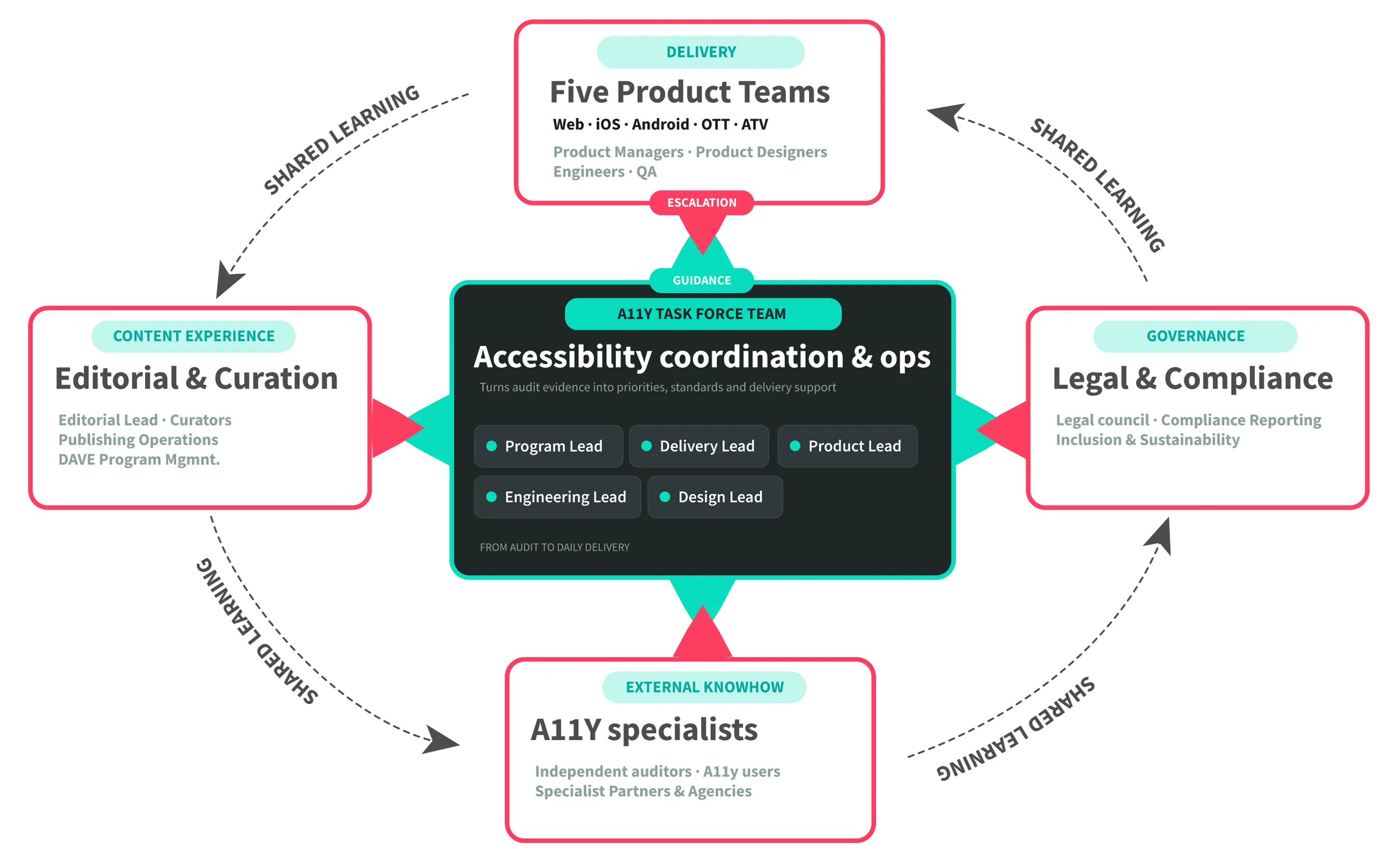
A cross-functional task force enabled shared learning
 (opens enlarged image)
As the work outgrew our small group, I used audit and research findings to secure support from Sustainability and Inclusion, our CPO and the CTO office. This enabled me to assemble a dedicated task force spanning product management, engineering, UX and delivery leadership.
With Nexum and Railslove, we outlined coordinated accessibility priorities for roadmap planning and established a Confluence knowledge base, while helping product teams resolve platform-specific issues independently.
08 · Define · A11y roadmap
A shared roadmap turned findings into action
 (opens enlarged image)
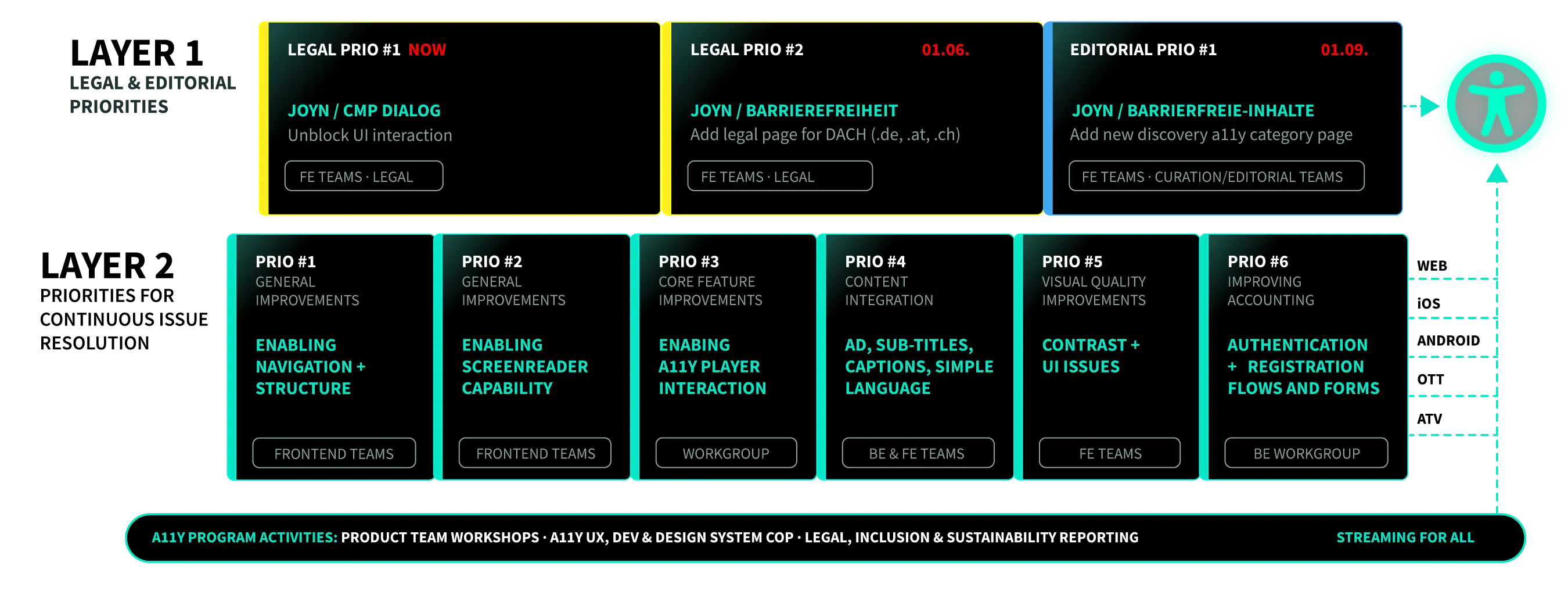
To prevent teams from becoming overwhelmed, we translated the audit findings into a two-layer roadmap and provided structured guidance in Confluence about how to resolve the issue at hand.
Product teams prioritised fixes within their platforms, while the cross-functional accessibility programme addressed shared requirements across product design, content publishing, legal reporting and assistive-technology support.
This gave teams autonomy without losing a common direction.
09 · Ideate and deliver · A11y user journey
Designing pathways into accessible content
 (opens enlarged image)
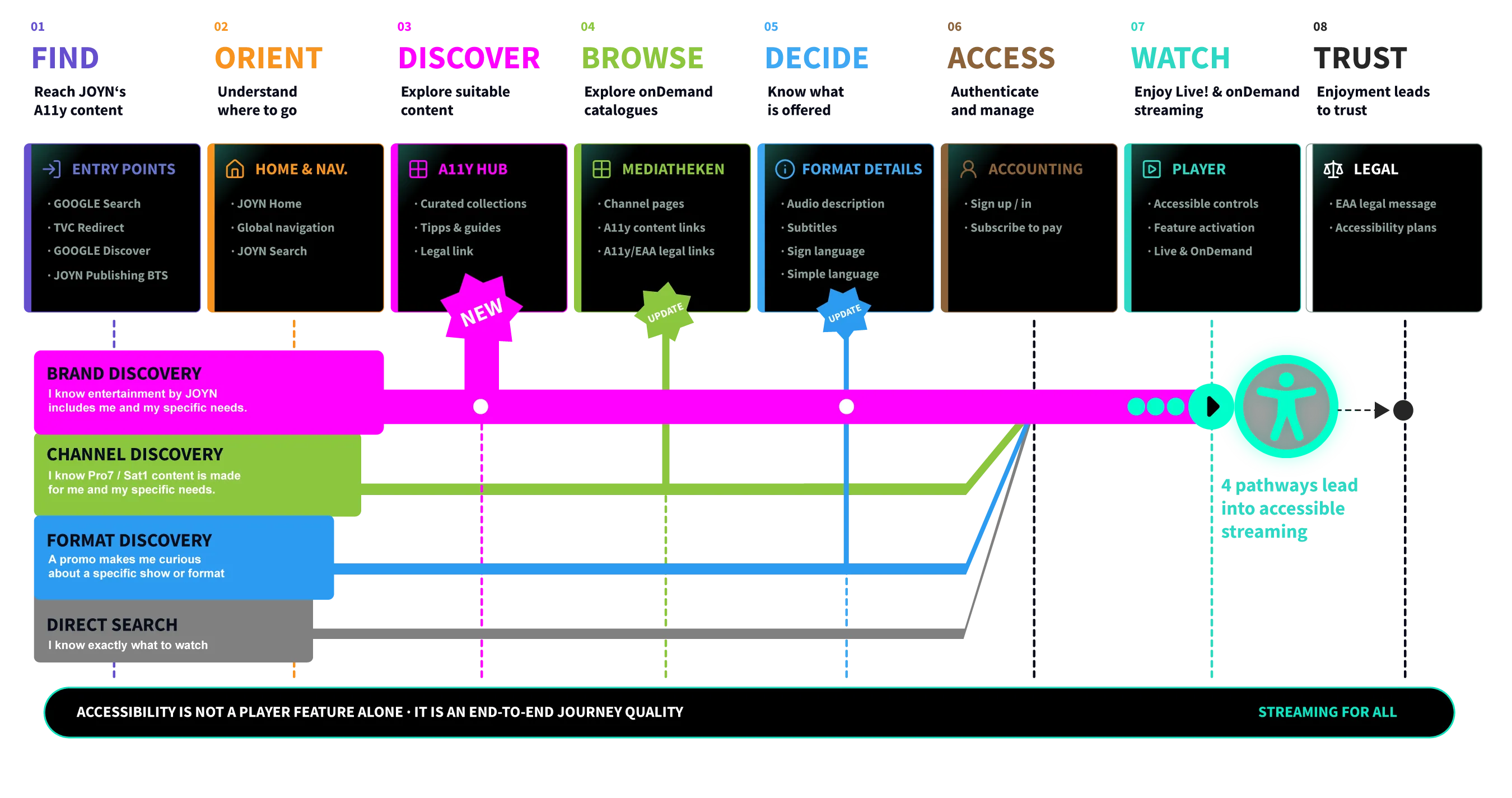
The audits showed that accessibility also depended on content discovery. Our research identified four entry patterns and their key touchpoints, revealing a gap: a dedicated “Barrierefrei” hub for accessible content.
The hub would improve SEO discoverability and give accessible content a new home as legacy ProSiebenSat.1 channel sites were retired in favour of JOYN’s channel pages and publishing platform.
10 · Deliver · A11y content hub
Accessible content also had to become discoverable
 (opens enlarged image)
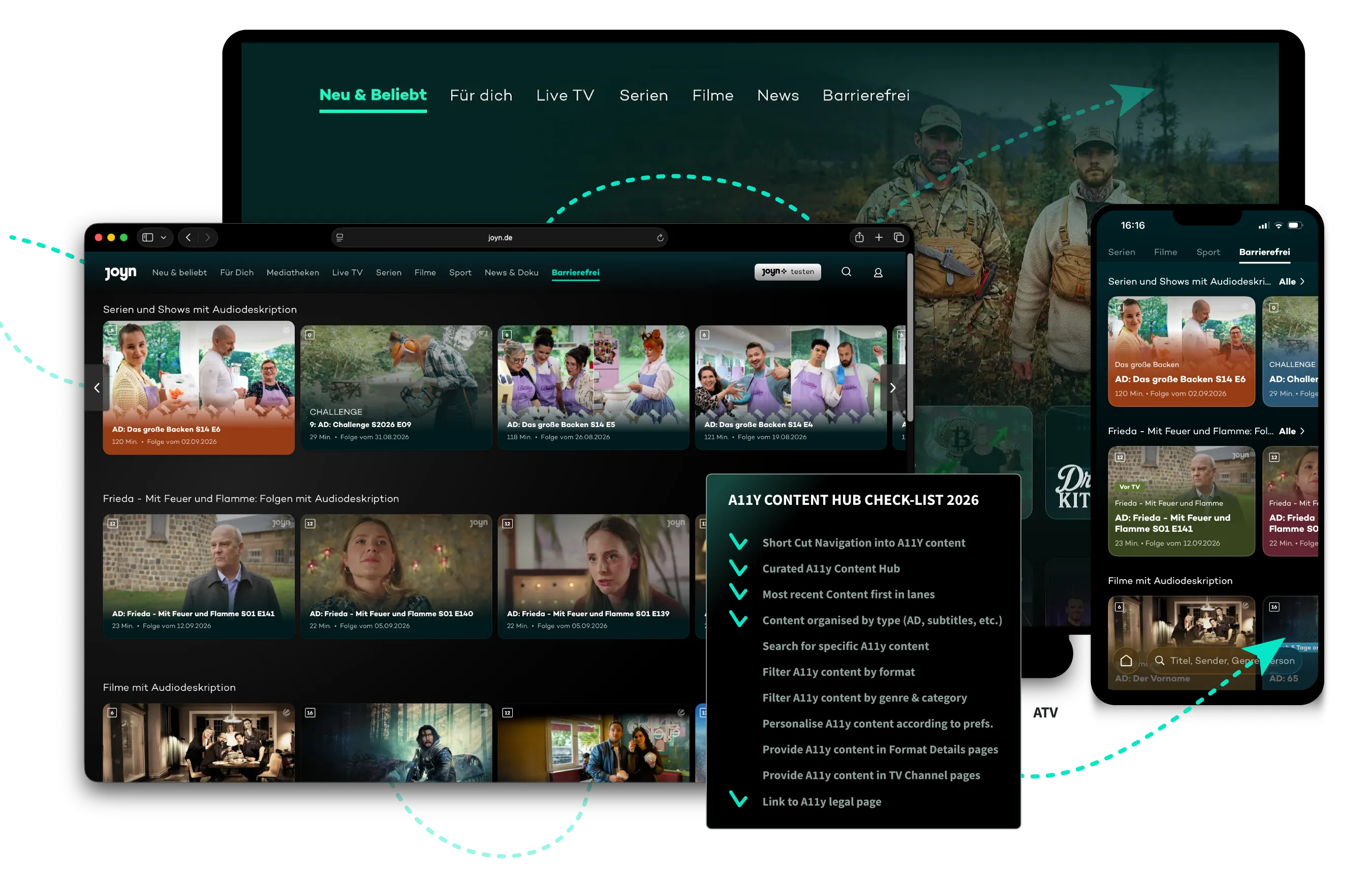
Together with editorial and curation teams, we developed a “Barrierefrei” hub across web, mobile and TV, bringing audio-described, subtitled and signed content into one curated destination while broader accessibility improvements continued.
Screen reader navigation, including VoiceOver, made the hub easier to use, while SEO helped audiences discover its content. Accessible content, produced by SevenOne, has never been easier to discover than today.
Visit the A11y Content hub here: https://www.JOYN.de/barrierefreie-inhalte (opens in a new tab)
11 · Embed · Best practices
The deadline started the work and new routines made it last.
 (opens enlarged image)
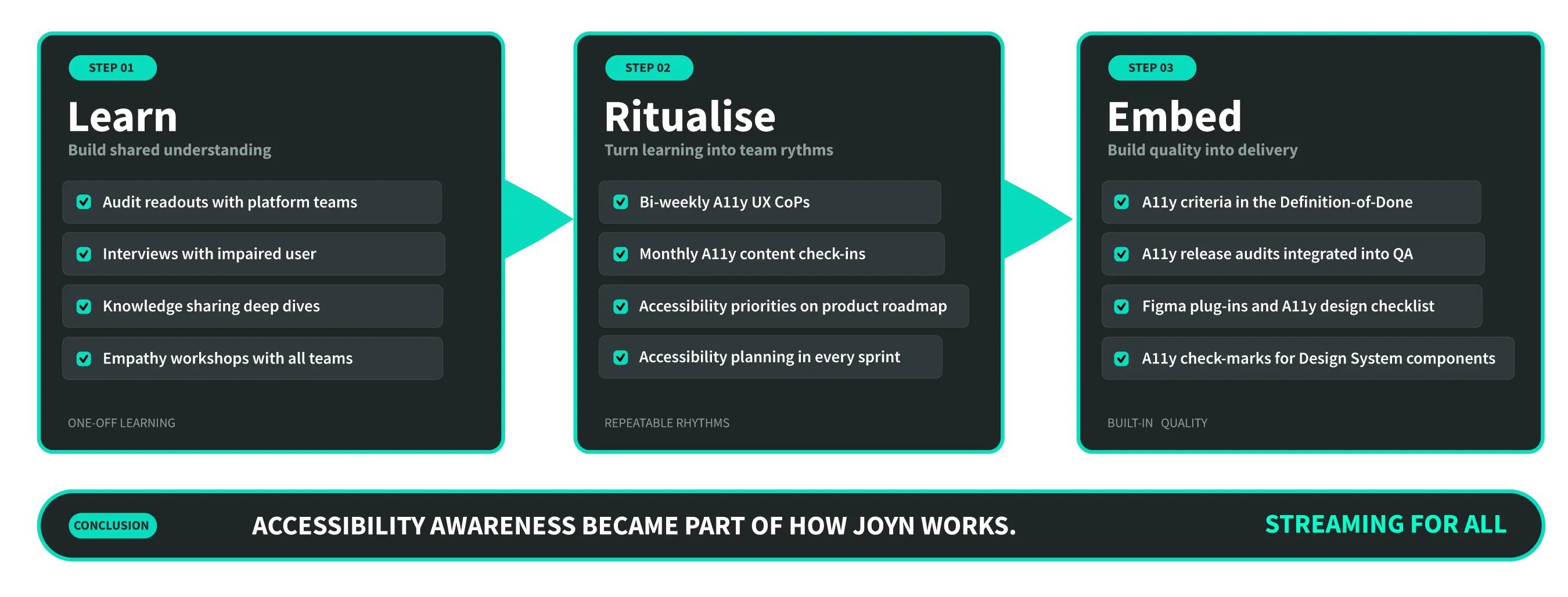
A recurring pattern emerged: learn, ritualise, embed. Audits and research created knowledge. Shared priorities moved accessibility into roadmaps. Communities of practice, design-system standards and editorial routines then helped make that knowledge repeatable.
Accessibility was no longer treated only as a deadline-driven project; it began to become part of how JOYN designed, developed and published streaming experiences.
12 · Outcome & Reflection
Progress that extended beyond compliance
- Secured a place for A11y Issue resolution on 2025 product roadmaps
- Shared responsibility for A11y established in product teams
- Reporting of WCAG compliance made possible for legal teams
- Publishing and centralised curation of A11y content firmly established
- A11y quality routines established in the design and product teams
Reflection
The most important shift was cultural: teams started asking accessibility questions before issues reached an audit.
The legal deadline created urgency, but shared understanding and repeatable practices gave the work a chance to continue beyond it.
Andreas was a strong sponsor and driver for accessibility at JOYN because he started the initiative and consistently championed it at leadership level and stood up for the quality of the user experience. He gave us the backing, supported hands-on and organisational space to advance accessibility across teams—as part of building a better product, beyond meeting compliance requirements.
Credits
Simon Heereman (Head of UX Foundation), Payal Shah (Agile Delivery Lead), Mandana Mansouri (Product Manager), Sergei Krieger (Engineering Lead), Tania Haas and Claudia Müller (Product Design), Sarah Kosuch (Head of UX Research), Partners from Nexum, Railslove and PIKSL